

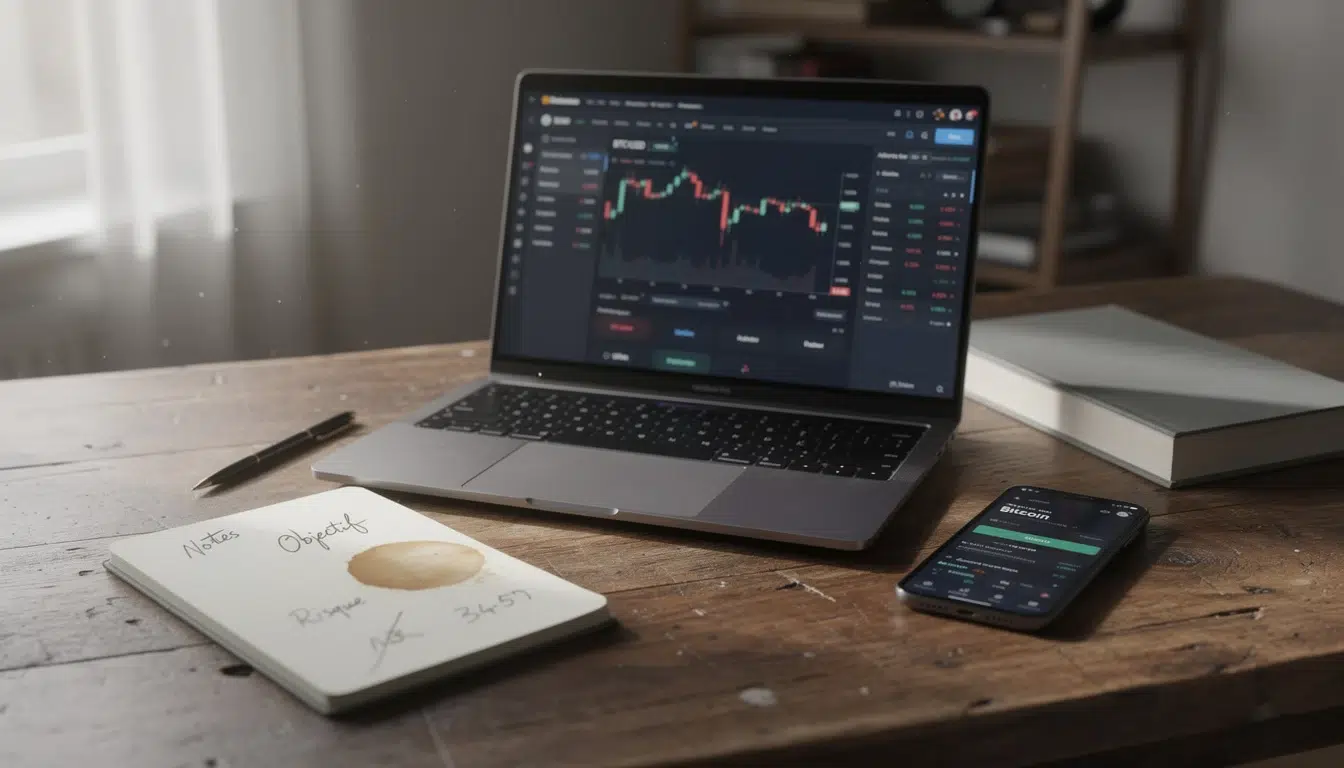
Every day, new people are getting into cryptocurrency trading, often motivated by the prospect of quick profits. However, the reality of the market requires rigorous discipline, based on clear strategies and controlled risk management. It is precisely with this in mind that Sumo Tradings, a crypto trading platform focused on analysis and decision-making, supports traders by bringing structure, visibility, and consistency to their actions. Even with advanced tools and powerful technologies, certain pitfalls remain common during early experiences. Let’s see how to identify and avoid them in order to strengthen your methods in the long term and better control the volatility inherent in the crypto market.
Planning and discipline: the non-negotiable foundations of success
The temptation to enter a trade impulsively or blindly follow intuition is particularly strong among less experienced traders. Yet without a clearly defined plan including entry and exit points, targets, and loss limits (optimization tp/sl), emotions quickly take over when markets become unpredictable. Consistently profitable traders always build their strategy before entering a position, simulating alternative scenarios for each possible market configuration.
Preparation goes far beyond spotting opportunities. Advanced planning helps prevent panic during the sharp price swings typical of crypto markets. It reduces behavioral biases and reinforces a structured, methodical approach over the medium term.
- Clear selection of the appropriate timeframe (from 5 minutes to 1 day)
- Precise identification of key price zones
- Systematic use of a risk/reward ratio greater than 2
- Backtesting on historical data to validate the robustness of the plan
Capital management and position sizing
Many beginners overcommit to a single trade, overestimating their ability to tolerate losses. Poor capital management frequently leads to significant drawdowns (or even near-total account loss) after only a few unfavorable streaks. Adjusting exposure using tools such as adr (average daily range) or atr (average true range) is essential to preserving long-term trading potential and surviving difficult market phases.
A proven approach is to size each position so that the risk per trade remains between 0.5% and 2% of total capital. Proper position sizing protects against consecutive losses and supports greater emotional stability, reducing impulsive reactions to extreme token volatility.
Analytical approach: follow the trend rather than fighting it
Trading against the prevailing trend may appear bold, especially when a move seems overextended. In practice, however, fighting strong momentum almost always results in false signals or costly reversals. Trend-following therefore remains a core performance pillar, supported by multi-timeframe analysis that highlights alignment between short- and long-term market forces.
Certain ai algorithms, such as proprietary engines developed by Sumo Tradings, now integrate automated detection of dominant trends, cross-referencing bullish and bearish signals with confirmations from volume and volatility. Attempting to anticipate reversals is only justified when backed by advanced statistical strategies like mean reversion, which are rarely accessible to beginners due to the lack of robust backtesting.
- Combined 5m / 1h / 1d analysis to filter market noise
- Automated filtering of false breakouts and premature entries
Decision independence and the biases of copy trading
Drawing inspiration from experienced traders or following popular online signals offers no guarantee of success. The main risk lies in growing dependency on external decision-makers, which limits your ability to adapt quickly if conditions shift unexpectedly. Understanding why a trade is taken, and the criteria behind it, is essential for long-term progress and adaptability in the ever-evolving crypto market.
Building and refining strategies requires embracing an active learning phase, where failure is an integral part of the process. Only by combining crypto market technical analysis, experience-based feedback, and factual validation through backtesting and trade journals can future entries be optimized rationally.
Technical consistency: avoid constantly switching systems
Jumping from one method to another after every loss leads to inconsistent results and prevents meaningful improvement. Technical setups, whether based on traditional indicators or advanced ai-driven analysis, require time to express their full statistical edge. Constant reinvention breeds fatigue and confusion, eroding any advantage you may have over the market.
A more effective approach is to select a limited number of well-defined systems and document their performance across different market conditions. This objective process helps identify optimal parameters without questioning the entire methodology after each drawdown.
- Dedicated journal tracking signal evolution and win rates
- Quarterly evaluations to refine,but never prematurely abandon, a validated model
Overinterpreting news and the trap of last-minute announcements
Many novice traders attempt to capitalize quickly on media announcements or major economic releases. In reality, most of this information is already priced into the market well before official publication. Trying to anticipate reactions in near real time often results in excessive spreads, slippage, and uncontrollable volatility, exposing capital to unnecessary risk.
Relying instead on a solid structural understanding of the market, cross-checked by ai models that respond only to genuine flow or volume anomalies rarely visible to the human eye, provides a true comparative advantage. In crypto trading, speed never outweighs precision when it comes to protecting capital against constant market unpredictability.